
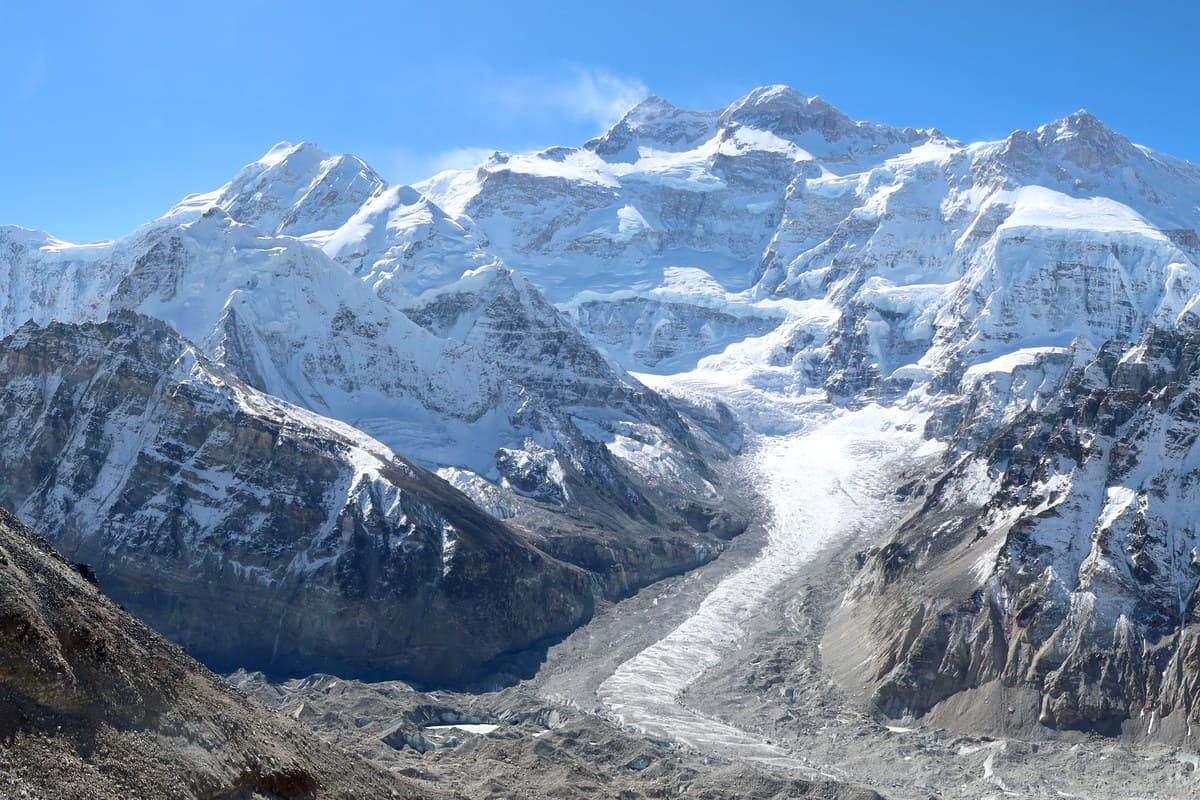
Kangchenjunga
The Five Treasures of the Great Snow • 8,586m
Overview & Geography
Rising to 8,586m in remote eastern Nepal on the border with Sikkim, Kangchenjunga is the third-highest mountain on Earth, prized for its pristine wilderness and untamed beauty.
Kangchenjunga translates as 'The Five Treasures of the Great Snow', referencing its five massive peaks symbolizing gold, silver, gems, grain, and sacred scriptures. Located inside the Kangchenjunga Conservation Area, it remains one of the least commercialized 8,000-meter peaks. The surrounding forests harbor red pandas, snow leopards, and rare Himalayan birds, while the climbing routes demand exceptional endurance over immense distances.
Ascent History & Heritage
Until 1852, Kangchenjunga was widely believed to be the highest mountain in the world before Survey of India calculations crowned Everest. In 1955, the British expedition led by Charles Evans honored a promise made to the Chogyal of Sikkim by halting five feet short of the summit to preserve its sanctity—a tradition honored by many subsequent expeditions.
Expedition Highlights
Third highest peak on Earth and the eastern anchor of Nepal's Himalayas
Pristine rhododendron sanctuaries with over 20 endemic species
Rich Limbu and Rai indigenous heritage in the lower valleys
Dual Base Camps: Pangpema (North Base Camp, 5,143m) and Oktang (South Base Camp, 4,730m)
Tradition of stopping short of the true summit out of respect for local religious beliefs
Standard Route
Southwest Face (Yalung Glacier) and Northwest Face
Untamed Himalayan wilderness, basic family-run home lodges, suspension bridges over roaring torrents, and very few western tourists.
Climber Advisories & Tips
- •Access requires restricted area permits and must be arranged through licensed Nepali agencies with registered guides.
- •The trek to either Base Camp requires 20-25 days of unsupported endurance through remote terrain.
- •Bring cash in NPR from Bhadrapur or Suketar; there are no ATMs past the airstrip.